Amazon Listing Optimisation for AI-Driven Shopping
Amazon listing optimisation is now critical. Amazon's AI assistant Rufus is changing how products get recommended and purchased on the platform.
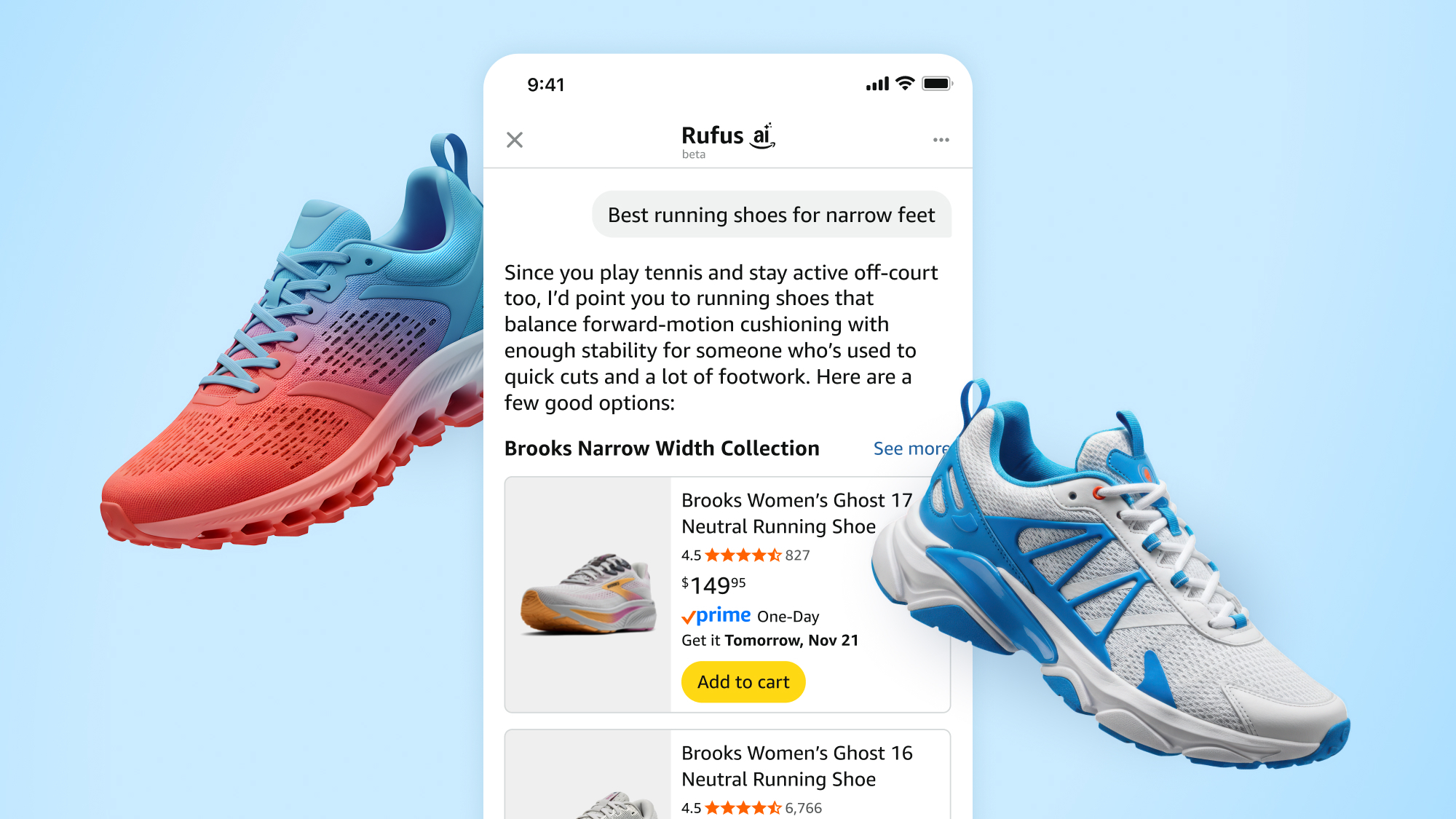
Amazon Is No Longer Just a Search Engine
Amazon has embedded a conversational AI assistant — Rufus — directly into the shopping experience. It's not a separate tool. It's influencing what customers find and what they buy right now.
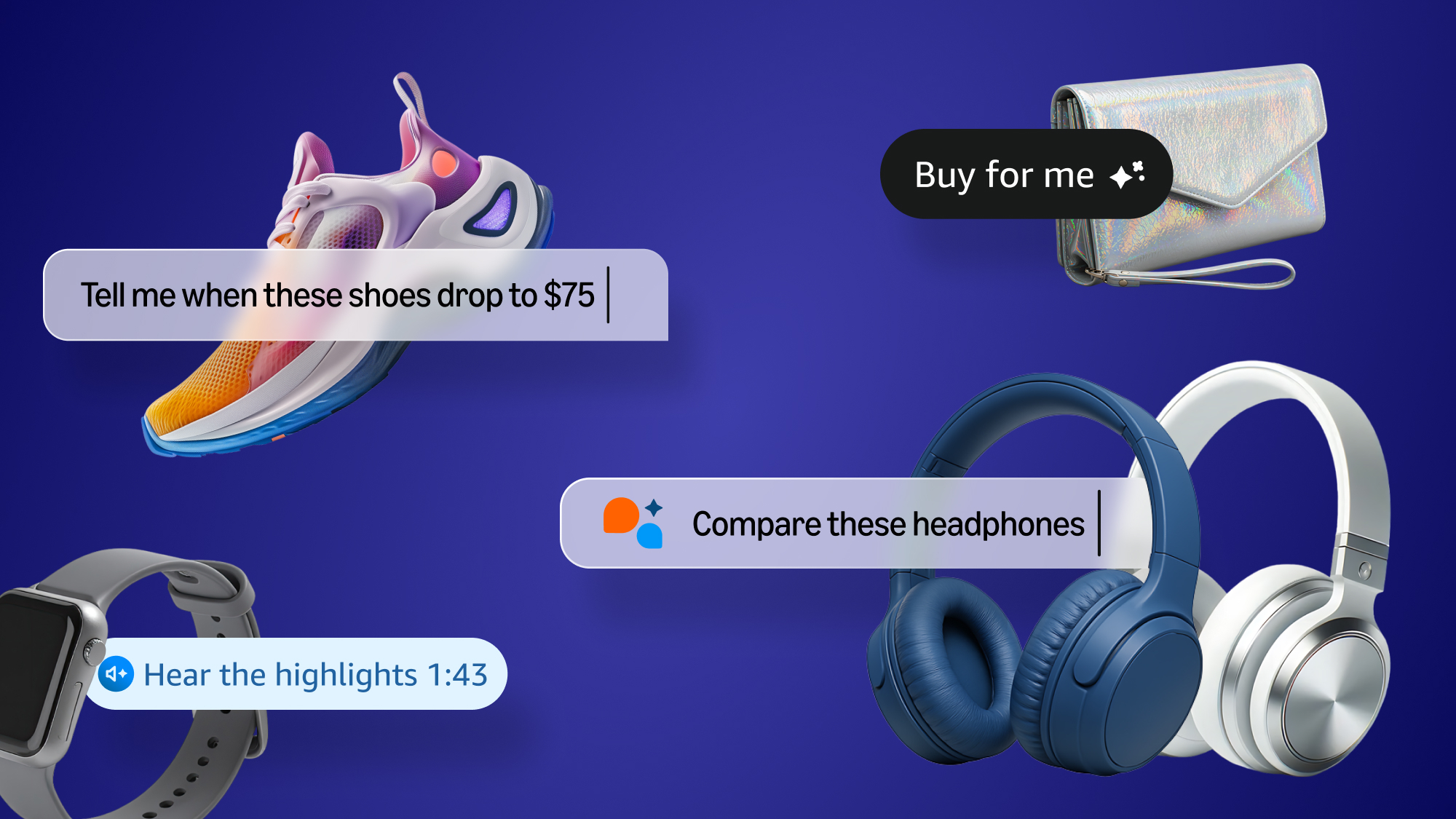
How Amazon Shopping Is Changing
This isn't a coming trend. Rufus is live, shoppers are using it, and listings that aren't structured for AI are already losing ground.
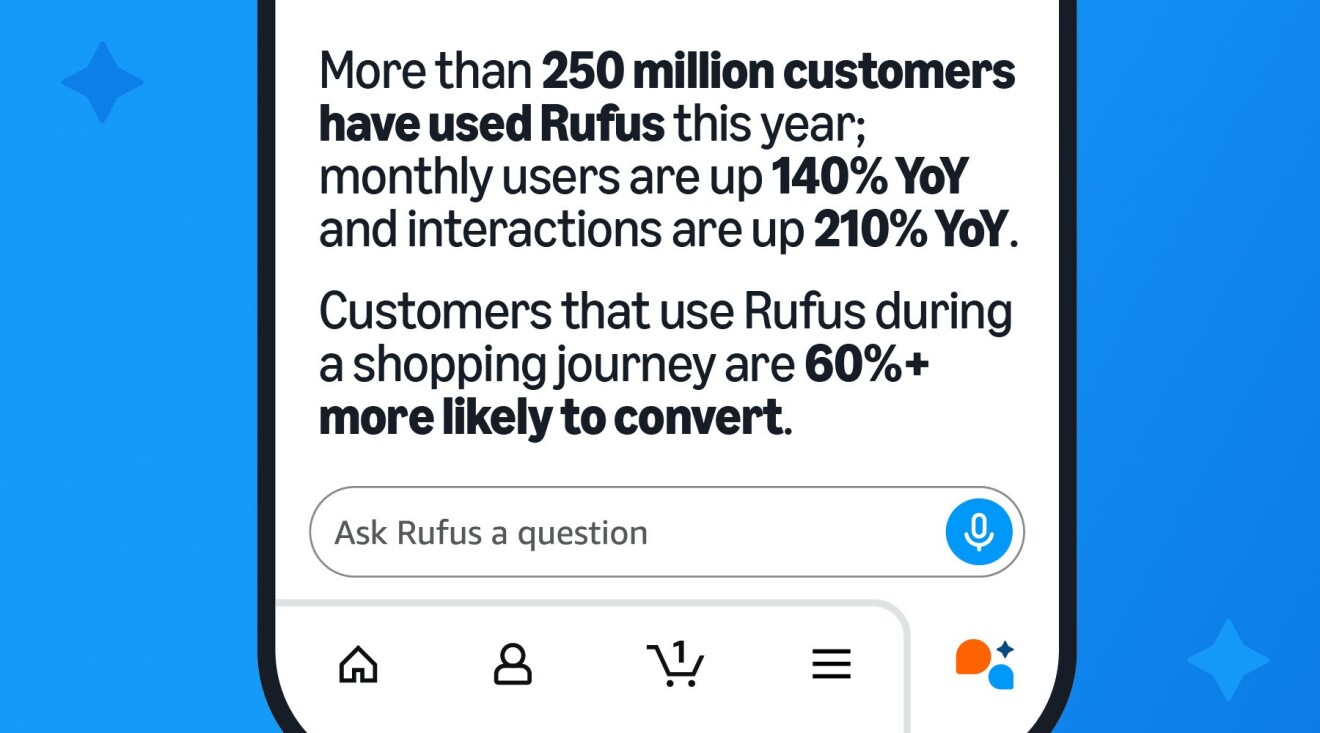
Watch How Amazon Rufus AI Changes the Shopping Experience
This short video from Amazon shows exactly how Rufus works — and why traditional listing strategies are no longer enough.
Amazon's AI shopping assistant Rufus — now live for millions of shoppers worldwide.
Most Amazon Listings Are Built for Search — Not AI
The optimisation tactics that drove results in traditional Amazon search are actively working against you in an AI-first environment.
Keyword stuffing that reads like a list, not an answer
Rufus processes listings like a language model. Fragmented, keyword-dense content signals low quality and poor relevance — the opposite of what you want.
No clear use-case articulation that AI can interpret
If your listing doesn't clearly explain who the product is for and when they'd use it, Rufus can't match it to the right conversational queries. You're simply absent from the recommendation.
Weak contextual signals that fail intent-based matching
Traditional listings are built around exact-match keywords. AI needs contextual language — the kind that demonstrates genuine product understanding and buyer relevance.
Listings structured for old search algorithms, not conversational AI
Amazon's A9 algorithm and Rufus use fundamentally different ranking signals. Optimising for one without acknowledging the other means missing an increasingly significant share of discovery.
Amazon Listing Optimisation for the AI Era
Five interconnected service areas, each targeting a specific dimension of how Rufus evaluates, ranks, and recommends products.
AI-Optimised Listing Structure
Conversational Query Mapping
Review & Sentiment Positioning
Product Context & Use-Case Optimisation
AI Visibility & Performance Tracking
How This Differs from Traditional Amazon SEO
These are not competing services — but they are fundamentally different disciplines. Traditional Amazon SEO optimises for the search algorithm. This service optimises for AI decision-making.
Both disciplines have value. The brands that combine traditional SEO with AI listing optimisation will dominate both discovery channels simultaneously.
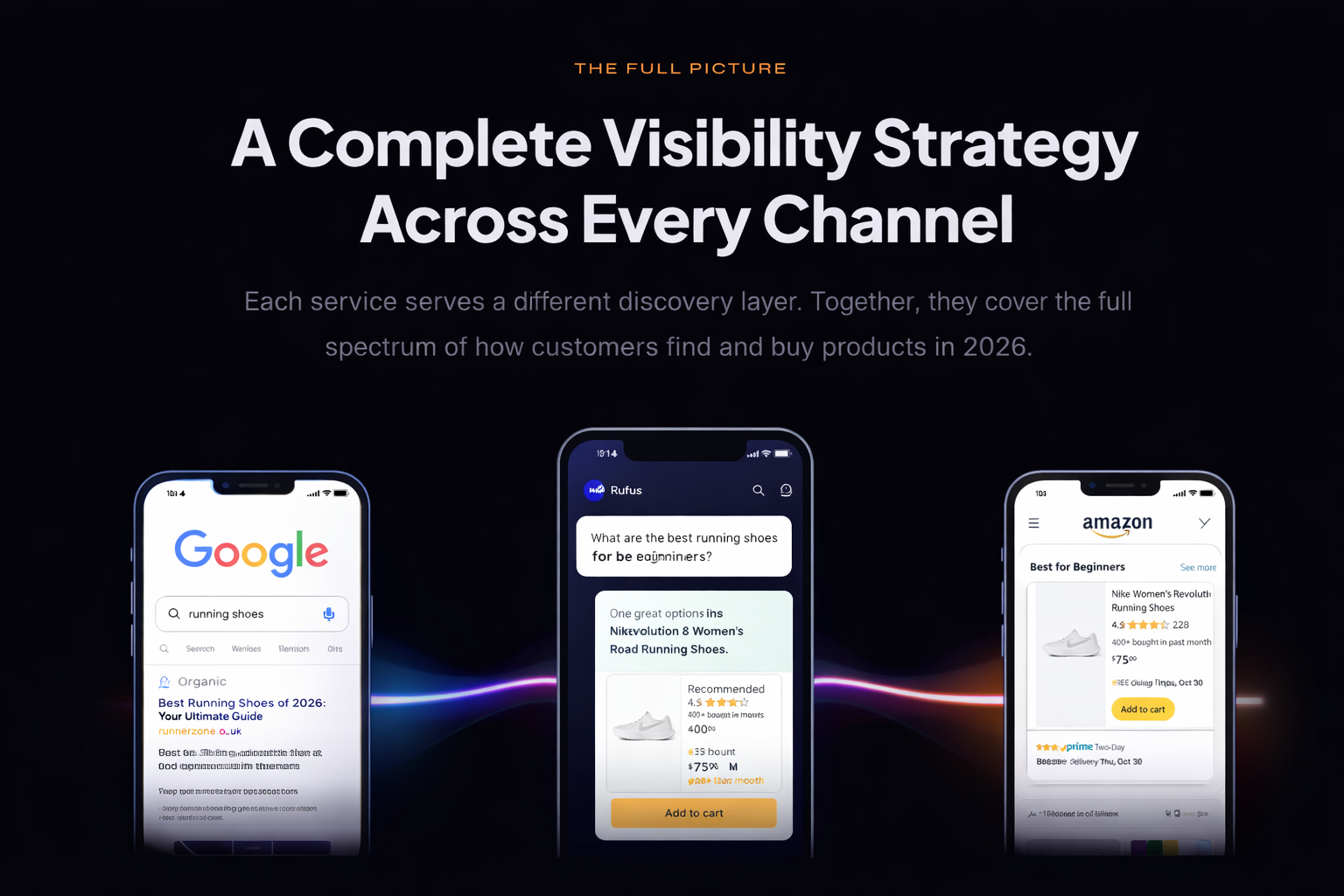
A Complete Visibility Strategy Across Every Channel
Each service serves a different discovery layer. Together, they cover the full spectrum of how customers find and buy products in 2026.
Traditional SEO
Google organic traffic, keyword rankings, and content visibility. The foundation of any digital strategy — still essential, still growing.
AI Commerce Optimisation
AI assistant discovery, ChatGPT and Gemini recommendations, and structured product data for AI-led shopping beyond Amazon.
Learn more →Shopify Agentic Commerce
AI-completed transactions, in-chat checkout, and agentic buying on Shopify — where AI doesn't just recommend, it completes the purchase.
Learn more →Amazon AI Optimisation
Marketplace AI recommendations, Rufus visibility, and intent-driven conversion on Amazon — where your buyers are right now.
The Commercial Case for Amazon AI Optimisation
Early-Mover Advantage
Most Amazon sellers haven't adapted their listings for Rufus. The brands that act now will build a compounding advantage in AI recommendations before the channel becomes competitive.
Higher Conversion Rates
Listings optimised for intent convert better because they answer the questions buyers are already asking. When a buyer arrives from an AI recommendation, they're pre-qualified for purchase.
Improved Recommendation Visibility
Products structured for AI are more likely to surface when Rufus answers relevant questions. Clear, contextual listings signal confidence to the AI — resulting in more recommendations.
Better Product Positioning
Clear use-case articulation helps Rufus match your product to the right buyer at the right moment. Strong positioning expands your effective audience without requiring additional ad spend.
Higher Revenue Per Listing
Better listing quality lifts both organic recommendation frequency and the conversion rate per click. Each improvement compounds — you're not just getting more visibility, you're extracting more value from it.
Reduced Ad Dependency
AI-driven organic recommendations reduce reliance on expensive sponsored placements. As Rufus recommendation frequency grows, you can rebalance spend away from paid towards organic AI visibility.
Transparent, Performance-Focused Pricing
All prices are indicative. Every engagement is scoped individually — you'll know exactly what's included before committing.
AI Listing Audit
- Full listing analysis against Rufus criteria
- AI gap identification across all listing fields
- Priority recommendations and quick wins
- Written report with actionable findings
Optimisation Project
- Full listing rewrite for AI-first intent
- Conversational query mapping across catalogue
- Use-case and positioning optimisation
- Delivery within 2–4 weeks
Ongoing Optimisation
- Monthly listing refinement and updates
- Performance monitoring and reporting
- Ongoing query alignment as Rufus evolves
- Adaptation to Amazon AI changes
Performance Partnership
- Full catalogue management and optimisation
- Priority response and dedicated account focus
- Competitive listing analysis included
- Ongoing strategy and performance sessions
All prices are indicative. Every engagement is scoped based on catalogue size and objectives. Get in touch for a tailored quote.
How It Works
A structured five-step process that takes your listings from search-optimised to AI-recommendation-ready.
Listing Audit
We analyse your current listings against AI recommendation criteria and identify specific gaps in structure, intent alignment, and contextual clarity.
Intent Mapping
We map your products to the real conversational queries buyers use when asking Rufus — covering use-case, audience, and buying scenario language.
Listing Rewrite
Every listing element — title, bullets, description, A+ content — is restructured for clarity, context, and AI-readability without sacrificing conversion.
Use-Case Alignment
We refine positioning language to ensure Rufus understands exactly who your product is for, when to recommend it, and why it's the right choice.
Monitor & Refine
We track performance and continue to iterate as Rufus evolves, buyer patterns shift, and new intent opportunities emerge in your category.
Frequently Asked Questions
Win Where Amazon Is Going — Not Where It Was
AI-driven recommendations are already influencing purchase decisions on Amazon. The brands that optimise now will build an advantage that compounds as Rufus becomes the primary discovery layer for more and more buyers.
Book an Amazon AI Strategy CallNo obligation. 30-minute call.